
Debit Cards vs Prepaid Cards: What's the Difference?
Discover the difference between debit cards and prepaid cards, how they work, their benefits and how to choose the right card for online and international payments.
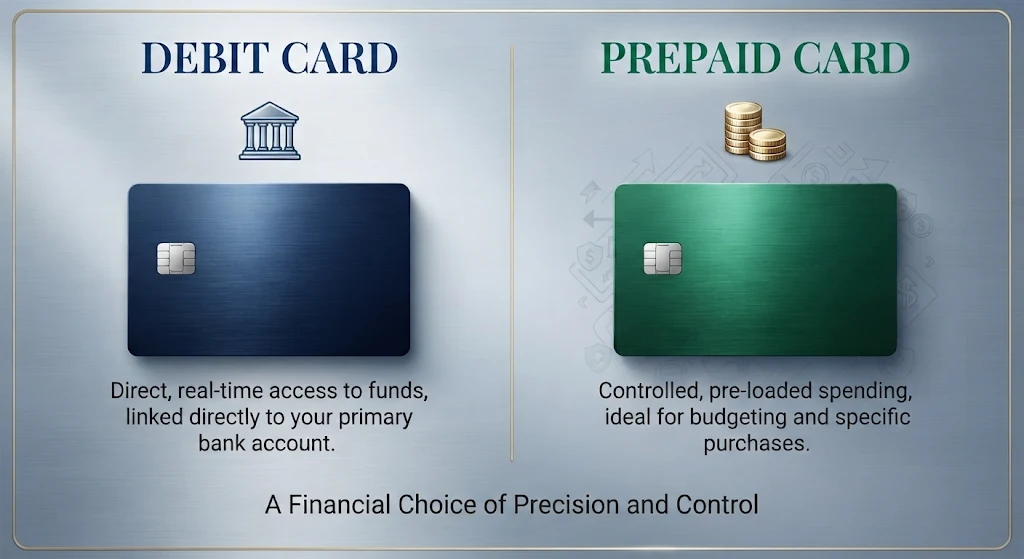
Debit Cards vs Prepaid Cards: What's the Difference?
You've probably used a debit card to pay for something online, withdraw cash or make a purchase at a supermarket. You may have also come across prepaid cards, especially when looking for a convenient way to manage online payments.
At first glance, they seem almost identical. Both can be used to make payments, both can be physical or virtual, and both may carry a card network logo like Visa or Mastercard.
So, what's actually different?
The biggest difference is where the money comes from.
A debit card gives you access to money in your bank account, while a prepaid card allows you to spend money you've loaded onto the card beforehand.
Let's break it down.
1. What Is a Debit Card?
A debit card is a payment card linked directly to your bank account.
Whenever you use it to pay for something, the money is deducted from your available bank balance.
For example, imagine you have ₦150,000 in your bank account and decide to buy a pair of shoes for ₦35,000 using your debit card.
Once the transaction is completed, your available balance reduces to ₦115,000.
Simple.
You don't need to load money onto the card separately because it draws funds directly from your linked account.
Common uses of debit cards include:
Paying for groceries and everyday purchases.
Withdrawing cash from ATMs.
Paying for subscriptions and online services.
Making POS payments.
Shopping on websites that accept your card network.
Debit cards are convenient because you can access your bank funds without carrying cash everywhere.
2. What Is a Prepaid Card?
A prepaid card is a payment card that you fund before using.
Instead of being connected directly to your regular bank account, it has a balance that you load with money.
Think of it like putting money in a separate spending wallet.
For example, if you load ₦50,000 onto a prepaid card, you can spend up to that available balance, subject to the card's limits and fees.
Once the money is used up, you'll need to add more funds before making additional purchases.
Prepaid cards are useful for people who want to separate certain expenses from their main bank balance.
Common uses of prepaid cards include:
Online shopping.
International payments, where supported.
Managing travel expenses.
Controlling spending.
Paying for subscriptions and digital services.
Some prepaid cards are physical, while others are virtual and designed primarily for online transactions.
3. Debit Cards vs Prepaid Cards: The Key Differences
Although both cards help you make cashless payments, they work differently when it comes to funding and spending.
A debit card draws money directly from your linked bank account, so your available spending balance depends on the money in that account and your bank's transaction limits.
A prepaid card, on the other hand, uses money you've loaded onto it separately, meaning your spending is limited by the available card balance and the provider's rules. With a debit card, you don't need to fund the card independently because it accesses your bank funds.
With a prepaid card, you generally need to load money before making payments and top it up when the balance runs low. A prepaid card can also help you separate money for online purchases or specific expenses instead of using the same account for everything.
However, both card types can have fees, spending limits, verification requirements and restrictions on where they can be used.
4. Which Card Is Better for Online Payments?
This depends on what you're paying for.
Debit cards are convenient when you want to pay directly from your bank account. However, some banks restrict certain international transactions, currencies or merchant categories.
Prepaid cards can offer more control because you fund them with a specific amount before making purchases.
For example, if you're paying for an international subscription, you may prefer using a card that supports the merchant's currency and payment requirements.
However, neither card type guarantees that every online payment will go through. Acceptance depends on the merchant, card network, issuing provider, currency, transaction limits and other security checks.
Before using either card, check:
Whether the merchant accepts your card network.
Whether international payments are supported.
The transaction and funding fees.
The card's spending limits.
Whether recurring payments and subscriptions are supported.
5. Can You Have Both Debit and Prepaid Cards?
Absolutely!
You don't have to choose one and abandon the other.
A debit card can handle your everyday banking needs, while a prepaid card can help you manage specific payments or separate your online spending.
For instance, you could use your debit card for groceries, transport and regular purchases, while keeping a separate prepaid card for online subscriptions or other payments.
It's simply another way to organize your money.
6. Are Virtual Cards Debit or Prepaid Cards?
This is where things can get a little confusing.
A virtual card is a digital version of a payment card. It has card details that can be used for online transactions, depending on the card's features.
But here's the important distinction: virtual describes the card's format, not how it's funded.
A virtual card can be debit or prepaid, depending on how the issuing provider structures it.
So, seeing a card inside an app doesn't automatically mean it's prepaid. You need to check how the card is funded and whether it's linked to a bank account or a separate card balance.
So, Which One Should You Choose?
There isn't one universal winner. It comes down to how you spend and what you need the card for.
Choose a debit card if you want direct access to your bank account, a convenient option for everyday transactions and a card for ATM withdrawals and POS payments.
Consider a prepaid card if you want a separate balance for specific expenses, more control over how much you set aside for spending, or a card for online and international payments where supported.
You can also use both to make managing your money more convenient.
Want a Prepaid Card for Your Online Payments? Meet YangaPlug.
If you're looking for a convenient way to pay for international subscriptions, shop online or manage digital payments, YangaPlug has a prepaid virtual Dollar card designed for exactly that.
With YangaPlug, you can create a virtual USD Mastercard, fund it using naira from your YangaPlug wallet and use it for eligible online payments wherever Mastercard is accepted.
Here's what you can use it for:
Subscriptions: Pay for services such as streaming, music and other digital subscriptions.
Online shopping: Make purchases on international shopping websites that accept Mastercard.
Digital advertising: Pay for online advertising platforms and campaigns.
Apps and software: Pay for digital tools and applications.
Travel bookings: Make eligible online travel payments.
You can also view your card transactions in the app, check the exchange rate and applicable fees before funding your card, and freeze or unfreeze it when needed.
No need to start wondering which card to use every time an international payment comes up.
Simply fund your card and use it for supported payments, subject to the merchant's acceptance and your card limits.