
Cheapest Time to Book Flights from Nigeria: A Practical Guide for Smart Travelers
Learn the cheapest times to book flights from Nigeria, the best booking windows for local and international trips, and how to avoid peak-season price spikes.
Cheapest Times to Book Flights from Nigeria: A Practical Guide for Smart Travelers
Flight prices from Nigeria can feel unpredictable. One day, a Lagos–London ticket may look reasonable; a few days later, it can jump by tens or hundreds of thousands of naira.
Airline pricing is not random. It changes based on demand, remaining seats, travel season, route competition, and how close you are to departure. There is no magic “book at midnight on Tuesday” rule, but there are reliable ways to improve your chances of paying less.
For most international trips, aim to book 10–24 weeks ahead. For Christmas and Detty December travel, plan 5–8 months ahead. For domestic flights, 2–6 weeks ahead is usually a safer window.
How airline pricing works
Airlines use dynamic pricing. The price of a seat can change depending on how many seats are left, how many people are booking, the departure date, and the fare class available at that moment.
Cheaper fare categories often sell out first on popular routes from Lagos and Abuja. Once those lower-priced seats are gone, the next available seats may cost more even if the flight is still weeks away.
That is why waiting for a last-minute deal can backfire, especially on long-haul routes with limited capacity.
Best time to book international flights
For a normal international trip from Nigeria, start checking prices three to six months before travel and aim to book around 10–24 weeks before departure.
If you are travelling for business and your dates are flexible, booking 4–6 weeks ahead can sometimes work. However, this is riskier during busy travel periods.
For Detty December and Christmas, book much earlier, ideally 5–8 months before departure. Demand rises sharply from September, and prices often increase significantly in the final weeks before Christmas.
For Hajj or Umrah, book several months ahead because demand is high and capacity is limited. If your trip depends on a visa, book as early as possible so you have time for appointments, documents, and possible delays.
If you are flying from Lagos or Abuja to places such as London, Toronto, Dubai, Johannesburg, Nairobi, Addis Ababa, Istanbul, or Doha, do not assume waiting will reduce the fare. Early booking often protects you from rising prices and gives you more flight options.
Nigerian travel periods to avoid
Some periods are naturally more expensive because many people travel at the same time.
December and Detty December are among the most expensive times to fly internationally from Nigeria. Diaspora travellers, students, families, and holidaymakers all travel during this period. If you must travel then, start checking prices in August or September and be ready to book early.
Easter is less extreme than Christmas, but fares still rise around the week before and after Easter Sunday. Travelling before Holy Week or after the Easter rush can help.
July and August are expensive for European and North American routes because of school holidays and peak leisure travel. June and September are often better-value months.
Eid periods, Christmas, New Year, and long public-holiday weekends can also push up fares on both domestic and international routes.
Cheapest days to fly
The day you buy a ticket matters less than people think. Airline prices change based on demand and available inventory, so there is no universally cheapest day to press “purchase.”
However, the day you fly can affect the price.
Tuesday, Wednesday, and Thursday are often cheaper departure days.
Friday and Sunday are usually more expensive because of weekend and return-travel demand.
Monday mornings can be costly on domestic routes, especially Lagos–Abuja.
Saturday can be mixed; early flights may be reasonable, while evening flights can rise as weekend demand builds.
If your schedule allows, compare Tuesday, Wednesday, Thursday, and Saturday before choosing a Friday or Sunday departure.
Domestic flights in Nigeria
Domestic flights do not need to be booked as far ahead as international flights, but last-minute booking is still risky.
For Lagos–Abuja, aim to book 2–6 weeks ahead. Avoid Monday morning and Friday afternoon if possible, as business and weekend travel demand can increase prices.
For Lagos–Port Harcourt, book 2–5 weeks ahead and avoid waiting until the final week.
For other domestic routes, book at least 14–45 days before departure. Compare airlines, departure times, and travel dates before paying.
Early-morning domestic flights are often cheaper and more reliable. Delays can build up through the day, so the first flight out may give you better value and a higher chance of departing on time.
How to compare prices without stress
You do not need to check flight prices every day. Instead:
Decide your destination and whether your dates are flexible.
Start checking prices 2–3 months before your ideal booking period.
Compare a range of dates, not just one day.
Compare early-morning, midday, and late-night flights.
Check nearby airports where relevant, such as Lagos and Abuja.
Note the best price you find so you can recognise a good deal later.
Book when the fare fits your budget and schedule, do not wait indefinitely.
Be flexible with dates and routes
Flexibility can save more money than trying to guess the perfect booking day.
Search a whole month rather than one exact date, compare midweek and weekend departures, and check early-morning or late-night flights. Also compare direct flights with one-stop options through hubs such as Doha, Addis Ababa, Istanbul, or Dubai.
A one-stop flight may take longer, but it can sometimes cost much less. Just make sure the layover, baggage rules, visa requirements, and connection times are realistic.
Common booking myths
“Book on Tuesday at midnight.” This is largely outdated. Airlines adjust prices continuously, so your travel date, route, season, and booking window matter more.
“Last-minute flights are always cheaper.” Sometimes airlines discount unsold seats, but on Nigerian international routes, cheaper fare classes often sell out early.
“Incognito mode always gives cheaper flights.” Private browsing may limit some tracking, but it does not guarantee a lower fare.
“The cheapest flight is always the best deal.” A cheaper ticket may come with long layovers, strict baggage rules, poor connection times, or high change fees.
Before you book
Check the following before paying:
Your passport is valid for at least six months beyond your travel date, where required.
You understand the visa requirements for your destination.
The baggage allowance, cancellation policy, and date-change fees.
Whether the fare includes checked baggage, seat selection, and meals.
The total cost in naira, including payment fees and exchange-rate implications.
Whether your payment method will work smoothly for international bookings.
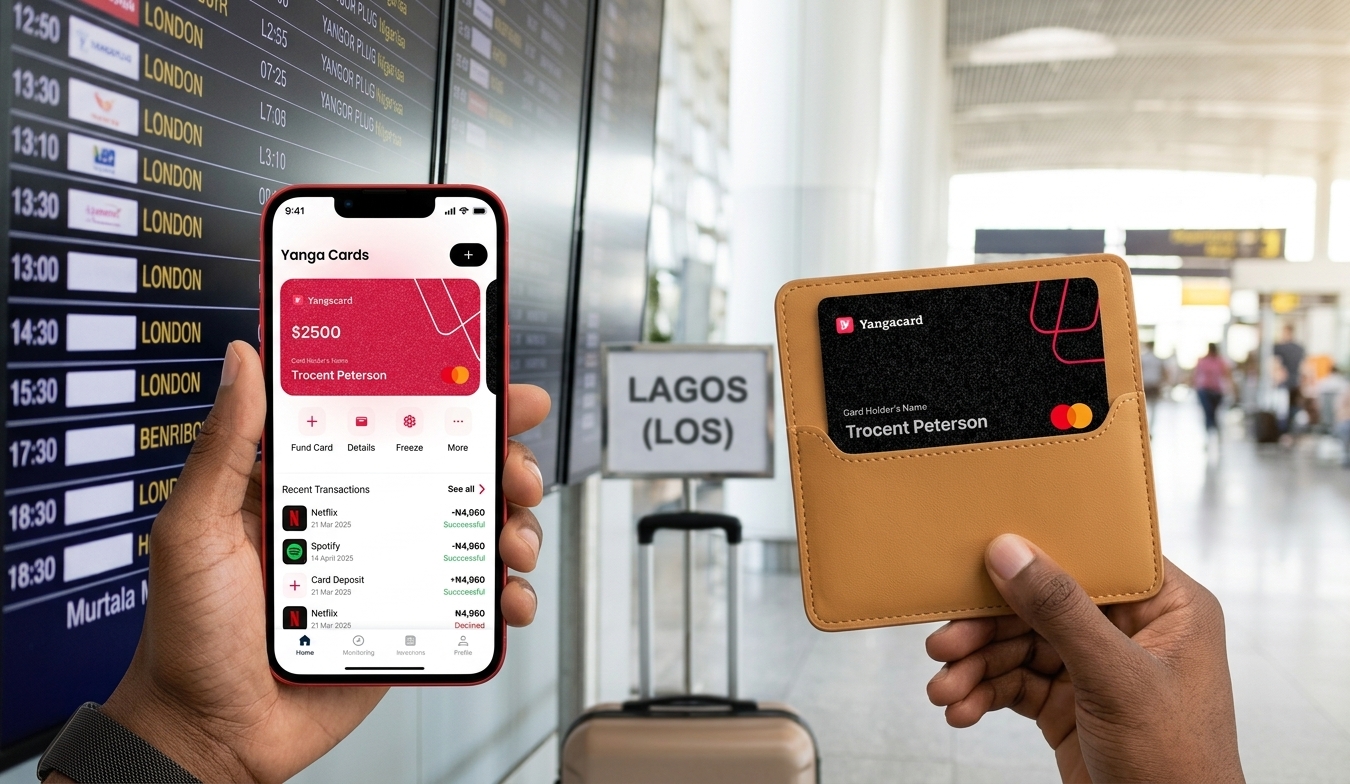
This is where YangaPlug can help. For online flight bookings, especially on foreign airline websites, a YangaPlug virtual card can help you separate travel spending from your main account and reduce the risk of exposing your primary card details online.
Final takeaway
The cheapest time to book flights from Nigeria is not one secret day or hour. It is the point where good timing, flexible dates, and early planning meet.
Start checking international fares 2–6 months ahead, plan even earlier for Christmas and Detty December, and book domestic flights 2–6 weeks ahead. Compare dates, understand peak seasons, and book confidently when the price works for your budget.